ROD CRAFT · MATERIALS
Fiberglass or Carbon for Texas Water?
Glass gives you feel. Carbon gives you speed. Here is how each material changes the cast—and which one fits the water you actually fish.
By GUADALUPE ROD CO · 8 min read · September 2026 · Rod Design
Ask ten fly anglers whether glass or carbon is better and you may get twelve answers. Here is ours: start with the water, not the material.
Carbon brings speed and control when the wind, distance, or fly gets demanding. Fiberglass slows the cast down, bends deeper, and lets you feel more of the fish. Neither wins everywhere. They just make different days better.
Modern S-glass is not the fiberglass of the past
Say “fiberglass” and some anglers picture a heavy E-glass rod from decades ago. Modern S-glass is different. It offers more strength and stiffness than traditional E-glass, so a well-designed blank can recover faster while keeping the deep, connected bend that makes glass fun.
Our glass builds are not noodles. They load easily on short casts, feel smooth through the stroke, and still keep useful power down low when a fish heads for the roots.
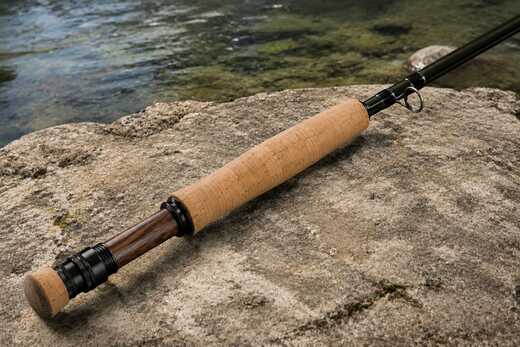
Clear or lightly colored S-glass can also look almost translucent. Pair it with a natural wood insert and quiet thread colors, and the finished rod has character without trying too hard.
Material and action are not the same thing
The material influences weight, stiffness, recovery, and feel, but taper and construction determine how the rod actually bends. Not every glass rod is slow, and not every carbon rod is extremely fast.
Fiberglass generally loads more deeply and communicates that load clearly. Carbon generally recovers more quickly and converts a compact casting stroke into greater line speed. The difference becomes noticeable when we move from a protected creek into wind, longer casts, heavier flies, or complicated rigs.
Where fiberglass shines
Fiberglass is at its best when the fishing is close and deliberate. On a small creek, the most important cast may be less than 30 feet. Trees limit the casting stroke, the water is clear, and the fly needs to land softly beside a root, boulder, or shaded bank.
S-glass loads with only a short length of line outside the tip, protects light tippet, and encourages a smooth tempo. It is an excellent choice for Rio Grande cichlids, panfish, small-water Guadalupe bass, stocked trout at close range, small poppers, foam bugs, light streamers, and dry flies.
It also gives modest fish more room to show their personality. Fiberglass turns the volume up on the fish.
Where carbon fiber takes over
Carbon earns its place when the wind rises, casts become longer, or the fly grows larger and more wind-resistant. Quicker recovery helps maintain line speed and tighter loops. Carbon also makes it easier to pick up line, change direction, mend across complicated currents, and repeatedly cast heavier flies.
If you naturally cast with a faster tempo, carbon will usually feel more responsive. When larger bass bugs and streamers become the purpose of the day, carbon is the clear choice. A glass rod may be capable of making the cast, but that does not make it the best tool for repeating it all afternoon.
Choose the rod for your water
The Creek represents what we enjoy about modern S-glass. Its 7'6" 3/4-weight blank loads easily at short distances, makes smaller fish more entertaining, and still holds reserve power for controlled casts and the occasional bass.
The Guadalupe 5w is the versatile carbon choice. Its 9-foot 5-weight blank provides reach, recovery, and line control for dry flies, nymph rigs, small streamers, Guadalupe trout, and Hill Country bass.
When large hair bugs, foam divers, and heavier streamers become the priority, the Llano 7w supplies the line speed and power to cast efficiently and turn fish away from cover.
Adjusting your casting stroke
With fiberglass, allow the rod time to load. Smooth acceleration and a slightly longer pause let the blank do the work. Trying to force the cast can pull the line and rod out of rhythm.
Carbon accommodates a quicker tempo. Its faster recovery allows tighter loops and more speed when the wind changes or a fish appears. Neither rhythm is inherently better. Many of us enjoy both, depending on the water that day.
Start with the water
Choose S-glass when casts are short, flies are light, and you want to feel more of the cast and the fish. Choose carbon when wind, distance, weighted rigs, bigger flies, or demanding cover make line speed the priority.
If you fish both situations, there is a good argument for owning both. Carbon can be the everyday tool. Fiberglass can make familiar water feel new again.
“Carbon handles the demanding days. S-glass slows things down and lets you feel more of them.”GUADALUPE ROD CO
Texas gives us room for both.
HANDCRAFTED IN TEXAS
Made to be fished.
Keep reading, explore rods assembled, wrapped, finished, and inspected by hand in New Braunfels, or tell us about the water you fish.