FISH & SEASONS · GUADALUPE BASS
Finding Guadalupe Bass in Small Water
That little Hill Country creek is not empty. Learn where Texas’ native bass hide, what to throw, and how to put the fly in the right lane.
By GUADALUPE ROD CO · 9 min read · September 2026 · Texas Hill Country
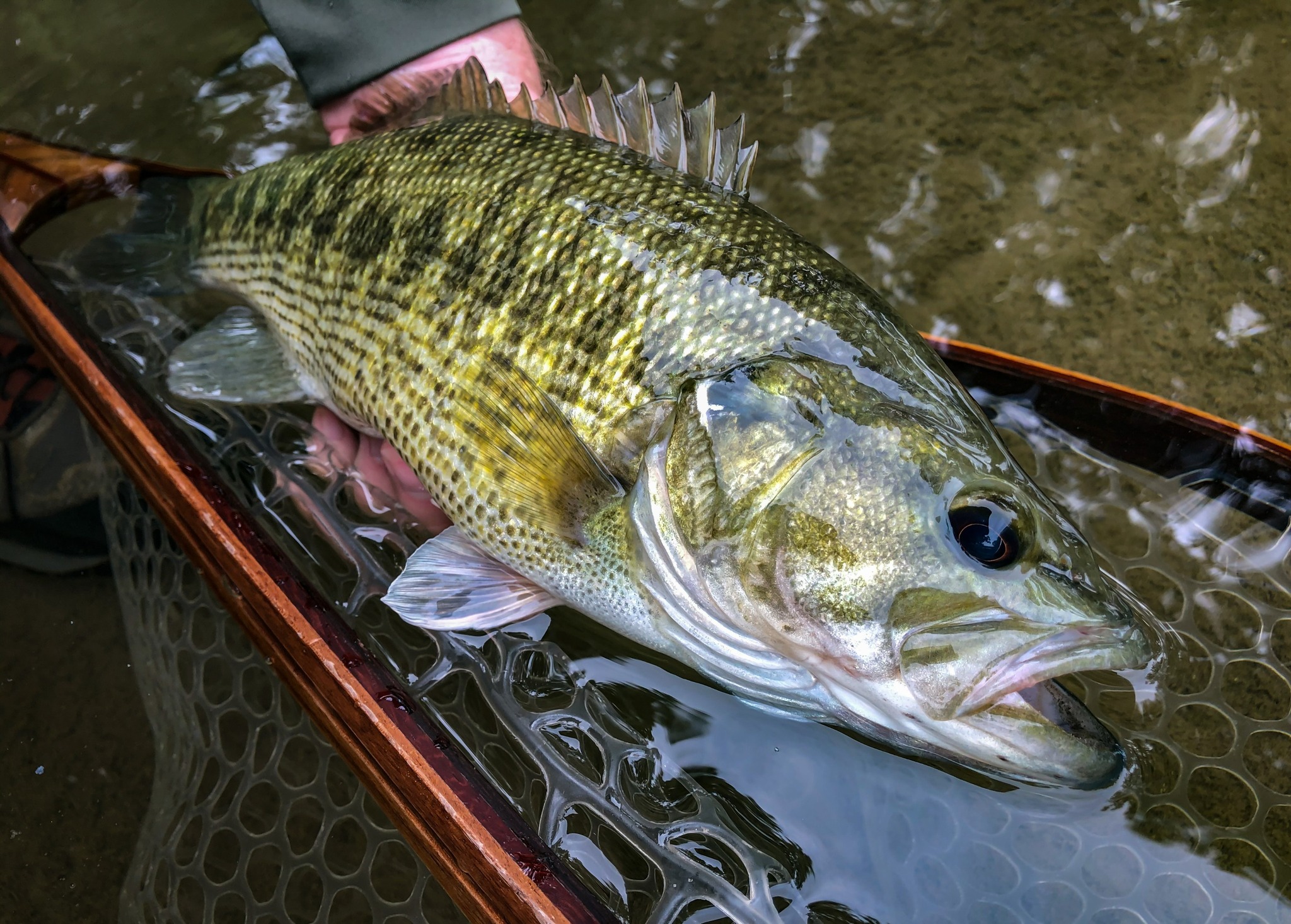
A creek can look too narrow, too shallow, and too clear to hold bass. Cast behind the right limestone ledge and a Guadalupe bass may prove you wrong immediately.
These fish are made for moving water. They do not need a huge pool—just current, cover, and a place to ambush food. Learn to see those small pieces and the whole creek starts looking different.
Small water is not empty water
In the clearest creeks, you can see almost every rock on the bottom. That does not mean you can see every fish. Guadalupe bass use tiny pieces of cover: a shadow beside a boulder, a root under the bank, a seam below a riffle, or a depression only a foot deeper than everything around it.
The best spots usually combine three things: moving water, nearby cover, and an easy escape into slower or deeper water.
Start just below a riffle. Fish the seam where broken water enters the pool, the soft pocket behind a rock, the shaded bank, and the tailout. Smaller fish often use the faster runs. Better fish tend to claim the best cover just downstream.
Look for boulders, bedrock shelves, roots, undercut limestone, fallen timber, dark slots, and shade. When the flow comes up, the quiet water behind a rock or ledge becomes even more valuable.

Aggressive does not mean careless
Guadalupe bass are willing predators. They chase minnows, attack crawfish patterns, rise to foam bugs, and use the current against you once hooked. A fish holding in broken water may react immediately because it has only a brief chance to capture passing food. A bass in a calm, clear pool may inspect the same fly carefully.
Lead the fish or its cover instead of landing directly on top of it. Let the current bring the fly into the feeding lane. If a fish follows without eating, change one thing at a time: reduce the fly size, slow the retrieve, add a pause, change depth, or move from a bright color to a natural one.

Fly design for small-water bass
Small Hill Country streams reward compact flies that land softly and reach the correct depth quickly. For most small-water fishing, patterns from roughly one to three inches long are sufficient.
The fly needs enough weight to enter the feeding zone, but excessive weight makes accurate casting difficult and can cause a hard splash. Sparse materials sink efficiently and keep their profile in current. Hook-point-up designs are especially useful around rock, wood, and vegetation.
Olive and white, tan and cream, rust, brown, black, and subtle yellow are dependable in clear water. Chartreuse accents can help when the water is stained.
Leaders and tippet
A 7½- to 9-foot leader is a dependable starting point. Use 2X or 3X for most streamers and crawfish patterns, fluorocarbon around abrasive rock, and nylon for poppers and terrestrials. On the Creek, 3X or 4X works well with small flies, while a shorter, more powerful leader improves accuracy beneath trees.
Extremely light tippet is rarely necessary. Guadalupe bass live around limestone, roots, and sharp rock. Stay subtle enough for clear water without giving up control.

Presentation strategies
- Approach from downstream. Stay behind the fish and remain out of the water when possible.
- Cast beyond the target. Let the current carry the fly into the seam instead of dropping it on the fish.
- Give the fly time to sink. A second or two can be the difference between passing over a fish and reaching it.
- Use short strips and pauses. Guadalupe bass often respond when a crawfish settles or a baitfish hesitates.
- Fish the edges first. Work the near seam, shaded bank, and tailout before the center of a pool.
- Try topwater in low light. Small poppers and foam bugs fit these streams better than oversized largemouth patterns.

Creek or Guadalupe 5w?
The Guadalupe 5w is our primary Guadalupe bass recommendation. Its 9-foot 5-weight design provides reach, line control, and enough authority for weighted streamers, wind, and stronger current.
The Creek is the specialized choice for the smallest water. Its short S-glass design shines where casts are close, the canopy is tight, and accuracy matters more than distance.
Ten flies for Guadalupe bass
- Chris Johnson’s BC Streamer. A clear-water Hill Country baitfish pattern for riffles, rocky banks, and small pools.
- Bennett’s Lunch Money. A compact two- to three-inch baitfish profile that fits clear streams and larger fish.
- Matt Bennett’s Rio Getter. A versatile Hill Country fly that can suggest an aquatic insect, small crawfish, or other bottom food.
- Chris Johnson’s Pinch Hitter. A useful local baitfish pattern when bass are focused on smaller forage.
- Small Clouser Minnow. Carry olive-and-white, tan-and-white, and chartreuse-and-white versions in sizes 6–10.
- Woolly Bugger. Olive, black, and rust versions can be swung, stripped, or crawled along the bottom.
- Compact crawfish. Choose a rust, brown, or olive pattern that rides hook-point-up around limestone and wood.
- Creek Leech. A sparse black or olive pattern for shaded pools and slightly stained water.
- Llano Bug or foam terrestrial. Cast tight to shaded banks and beneath overhanging vegetation.
- Small popper. Use subtle pops and long pauses in black, yellow, olive, or natural colors.
Treat this list as a starting point, not a rule. Carry several sizes and choose the weight, profile, and color for the water in front of you.
A fish worth protecting
The Guadalupe bass is found naturally only in Texas and is our official state fish. Use tackle strong enough to land it quickly, keep it wet while removing the hook, support it with wet hands, and release it into calm water where it can recover.
Once you begin seeing the seam behind the rock, the shadow beneath the bank, and the trough below the riffle, even the smallest Hill Country creek starts to look full of possibilities.
HANDCRAFTED IN TEXAS
Made to be fished.
Keep reading, explore rods assembled, wrapped, finished, and inspected by hand in New Braunfels, or tell us about the water you fish.