TEXAS WATERS · SPECIES GUIDE
Fly Fishing for Rio Grande Cichlids
Rios are bright, territorial, and surprisingly good at stealing the wrong end of a fly. Learn where they hold and how to turn more follows into fish.
By GUADALUPE ROD CO · 8 min read · September 2026 · Hill Country Creeks · Rio Grande Cichlid
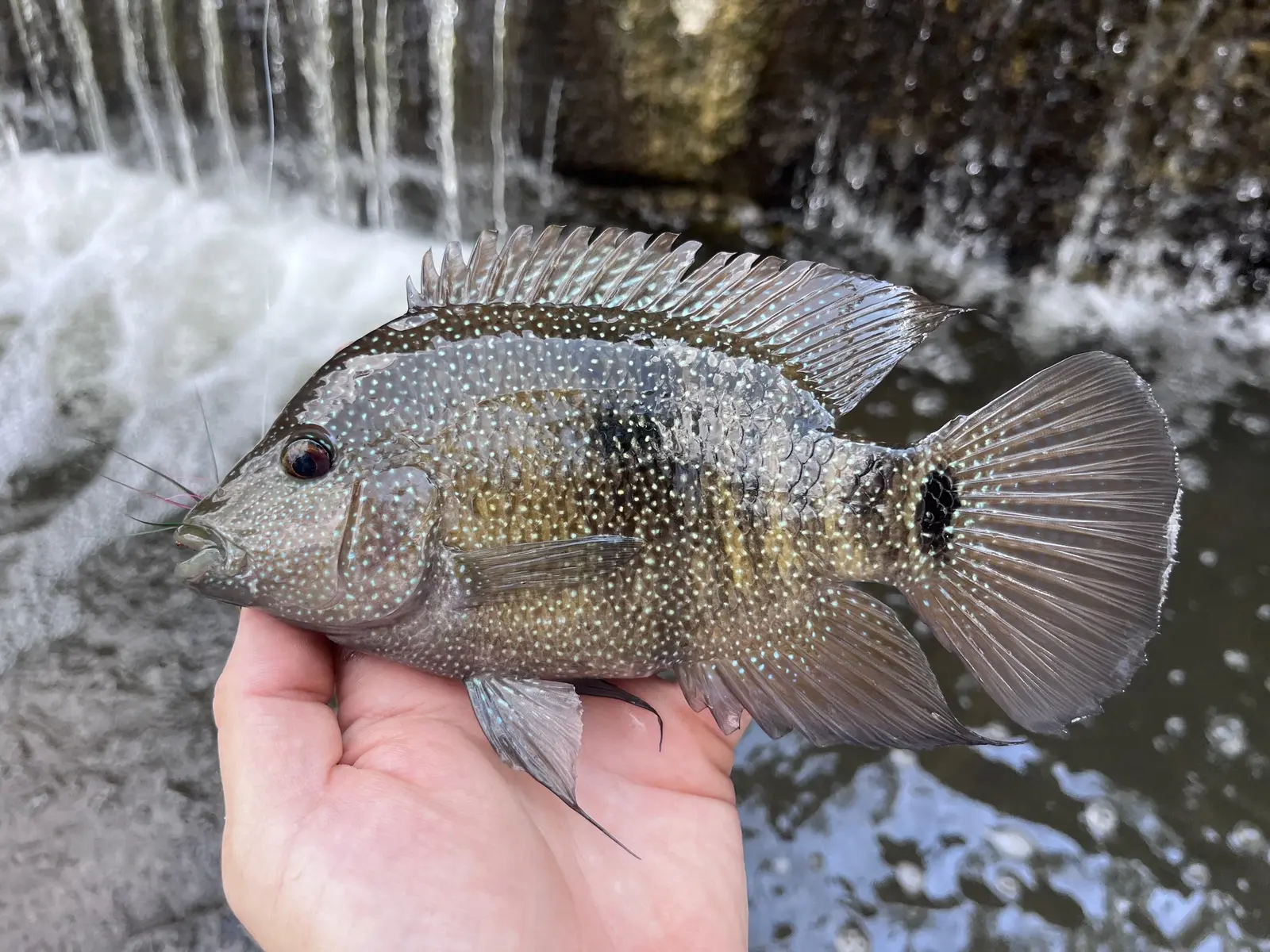
A Rio can charge your fly, grab it by the tail, move it six inches, and spit it out without ever giving you a clean hookset. Welcome to one of Central Texas’ most entertaining fish.
They are bold, territorial, and smarter than they get credit for. Find the small piece of water a fish has claimed, then give it a compact fly it can actually eat. That is the game.
Find the habitat, not just the river
Start by looking for a break in the current. Rios often hold where moving water delivers food but a nearby soft pocket lets them conserve energy. That could be the inside edge of a bend, the downstream side of a rock ledge, a calm pocket beside a riffle, or the seam where faster water slides past a shaded bank.
Hard cover matters. Limestone shelves, broken rock, root wads, submerged branches, bridge structure, and undercut banks all give these fish a place to claim. In clear water, do not look only for the fish. Look for a round shadow, a flash of turquoise, or a dark shape that keeps returning to the same piece of cover.
Depth and shade become more important when the sun is high. A small depression, the darker water beneath overhanging brush, or a slot along a ledge may hold several fish even when the surrounding flat looks empty. During warmer periods, shallow areas near firm rock or gravel can also become territorial zones. If one fish repeatedly runs other fish away, you have probably found a place worth presenting a fly several times.
Aggressive does not always mean hungry
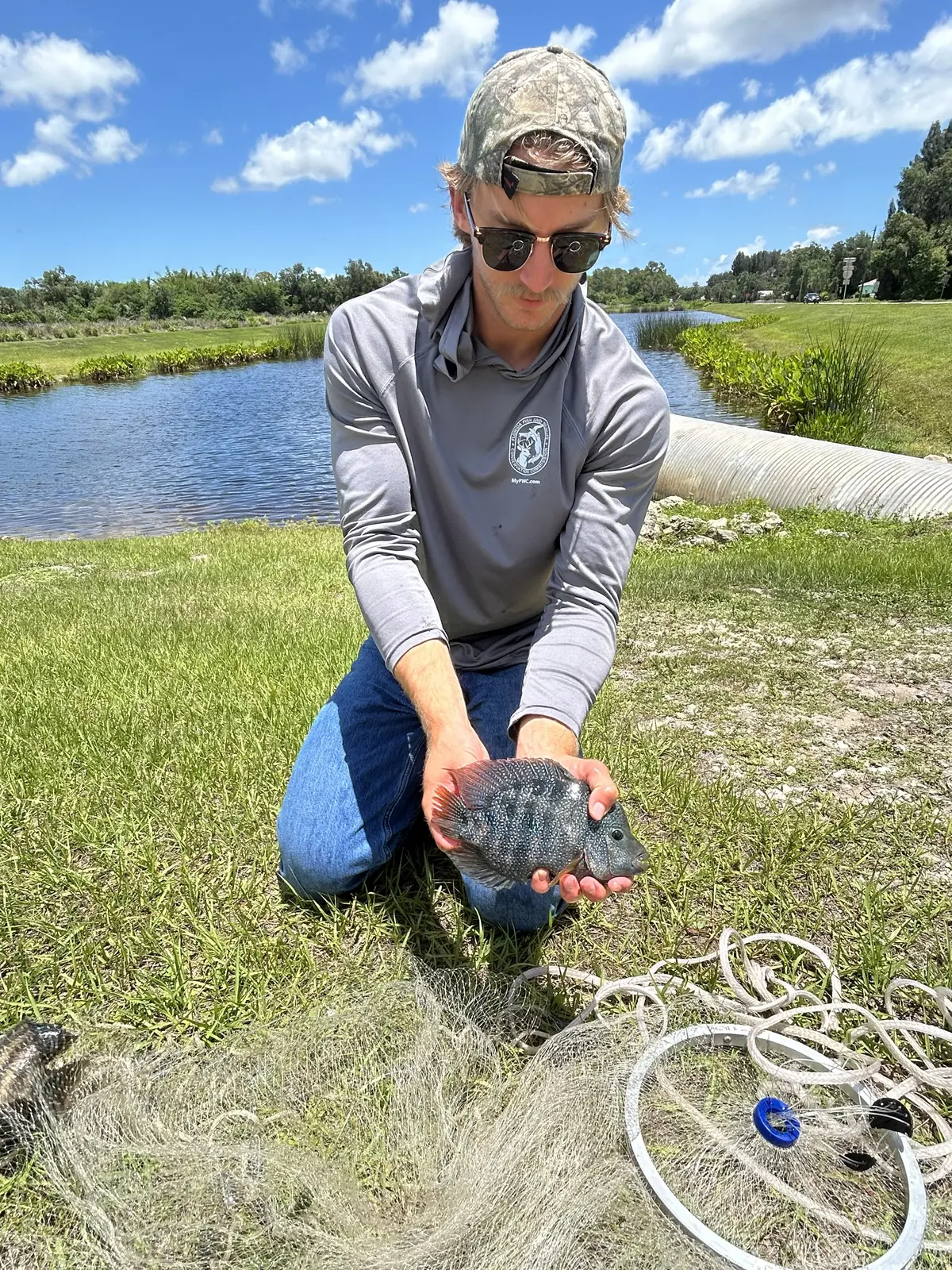
Rios are cichlids, so territory matters. A fish may chase because the fly looks like food, or it may just want that intruder off its rock. That is why a dramatic charge does not always end with a solid hookup.
We have watched fish grab a fly by the tail or legs, carry it away from cover, and spit it out. It looks like an eat to us. To the fish, it may just be housekeeping.
“With Rios, the best fly is not simply the one that gets chased. It is the one they can take cleanly.”GUADALUPE ROD CO field note
Why fly design matters so much
Compact flies generally give you a better chance of putting the hook where the fish grabs. Long tails, oversized rubber legs, and bulky claws can create plenty of movement, but they also give a cichlid something to pinch without reaching the hook point.
We favor patterns with a clear, compact profile, an exposed hook gap, and enough weight to reach the fish without crashing into the water. A fly that rides hook-point-up is helpful around rock and wood. If fish keep moving the fly without getting hooked, shorten the tail, trim the legs, or step down one size before changing patterns completely.
Color still matters, but silhouette and proportion often matter more. Olive, black, brown, rusty orange, and small flashes of chartreuse or orange all have a place. The goal is a fly that looks alive, reaches the holding depth, and lets the fish get the hook into its mouth.
Leader and tippet setup
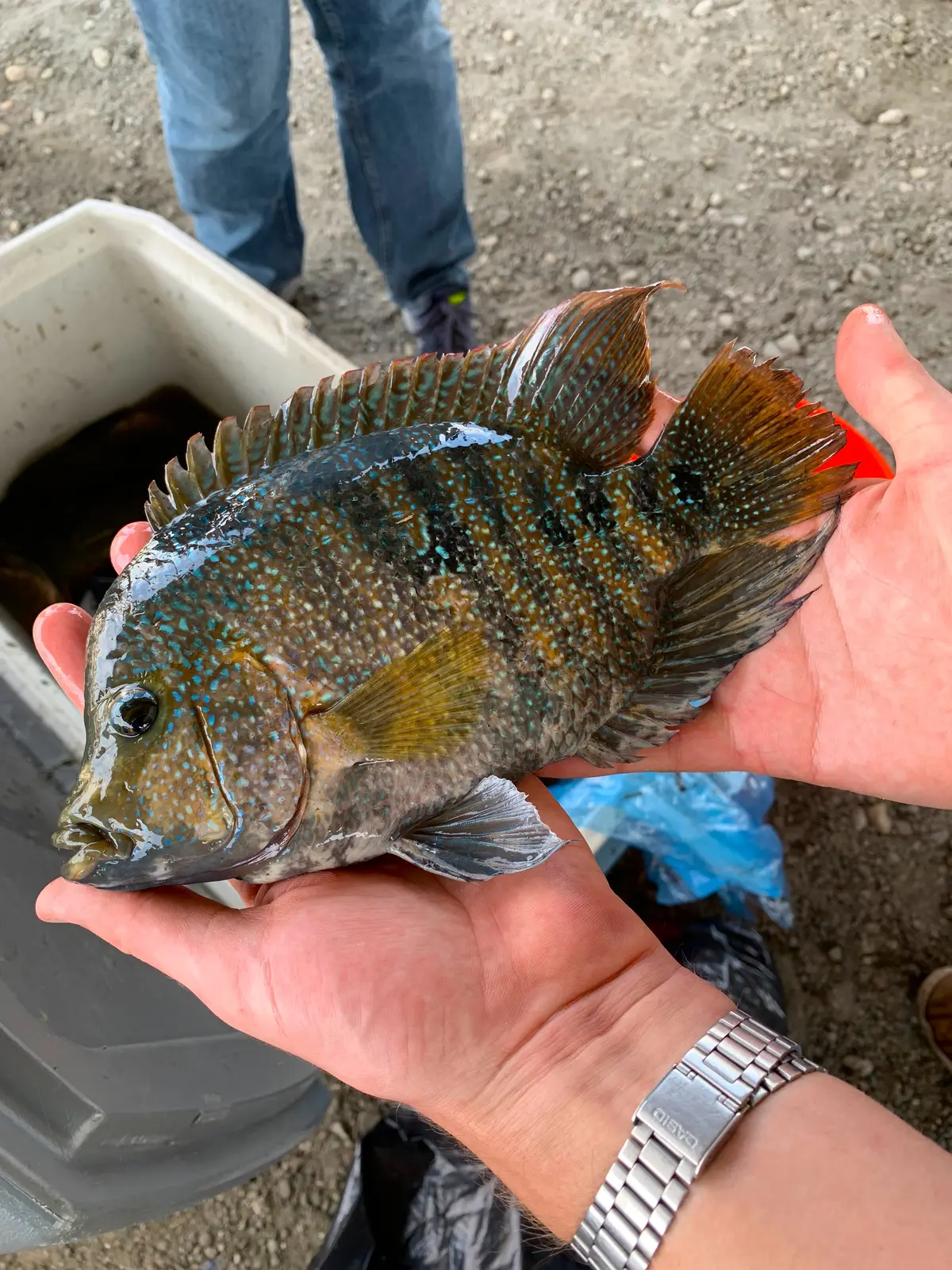
For most creek and river fishing, start with a 7½- to 9-foot leader. Clear water and small flies may call for 4X, but 3X is our normal starting point. Around sharp limestone, roots, or heavier cover, 2X gives you more confidence and still turns over compact Rio flies well.
- Small creeks and light flies: 7½- to 9-foot leader ending in 3X or 4X.
- Weighted flies or moderate cover: 7½- to 9-foot leader ending in 2X or 3X.
- Deeper pockets: Add fluorocarbon tippet or a short fluorocarbon section to help the fly sink and resist abrasion.
- Topwater flies: Stay with nylon so the leader does not pull a small popper or foam spider under.
Rios fight harder than their size suggests, and the places they live are not always gentle on tippet. Going extremely light rarely adds enough bites to justify losing control of a fish beside rock or submerged wood.
Present the fly like you expect to watch the eat
When the water is clear, sight fishing is the most useful teacher. Cast beyond the fish or beyond its piece of cover, let the fly settle, and bring it into view with short strips or small hops. Avoid dropping the fly directly on top of the fish unless stained water or heavy shade lets you get away with it.
Once a Rio shows interest, slow down. A long, fast retrieve can pull the fly out of its territory. A short movement followed by a pause gives the fish time to inspect, pick up, or move the pattern. Watch the fish’s mouth and body angle rather than waiting to feel a violent strike.
If the fish takes, use a controlled strip set while keeping the rod low. A hard trout-style lift can pull a small fly away before the hook finds purchase. If the fish follows without committing, repeat the same path, then adjust depth or trim the fly before abandoning the spot.
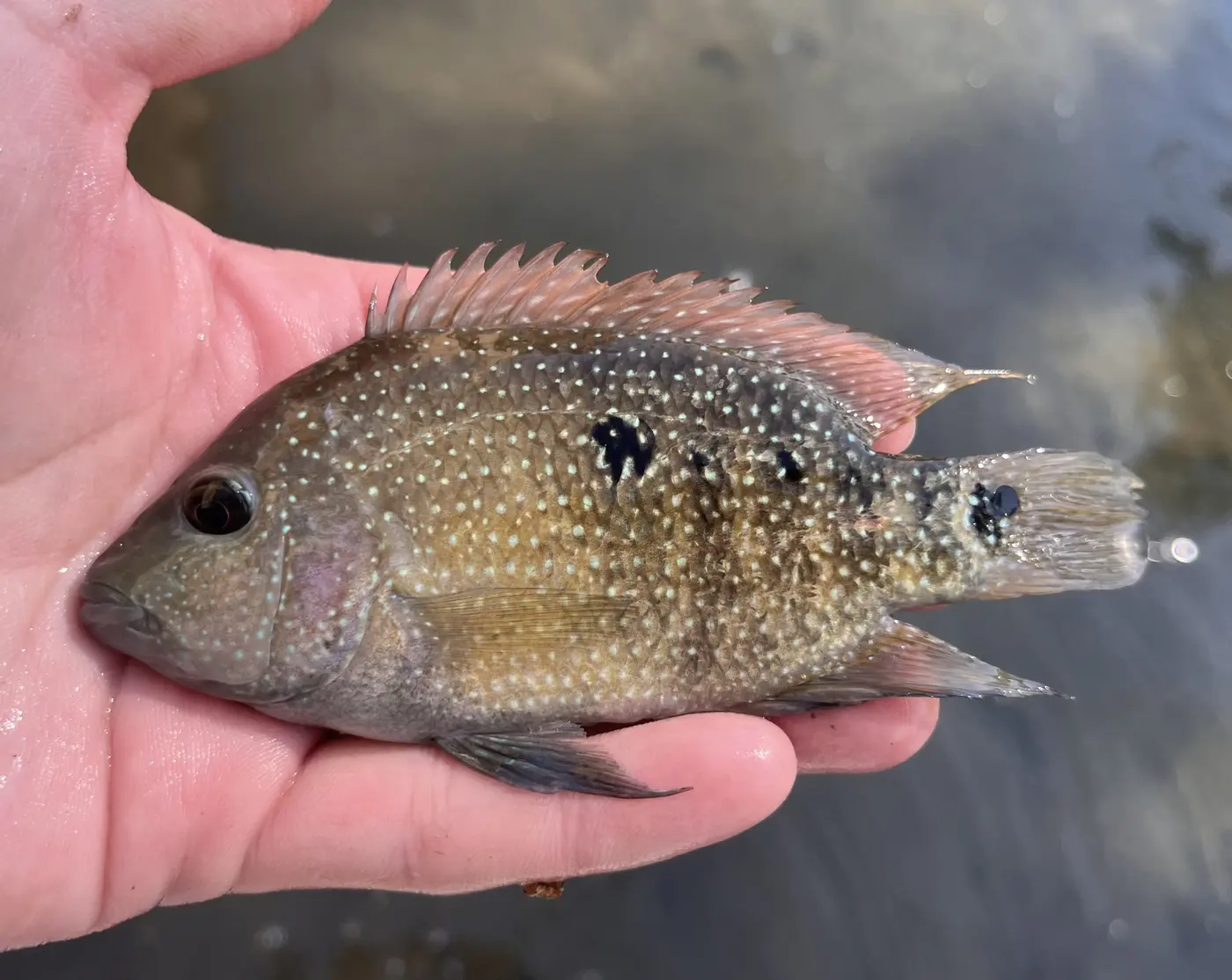
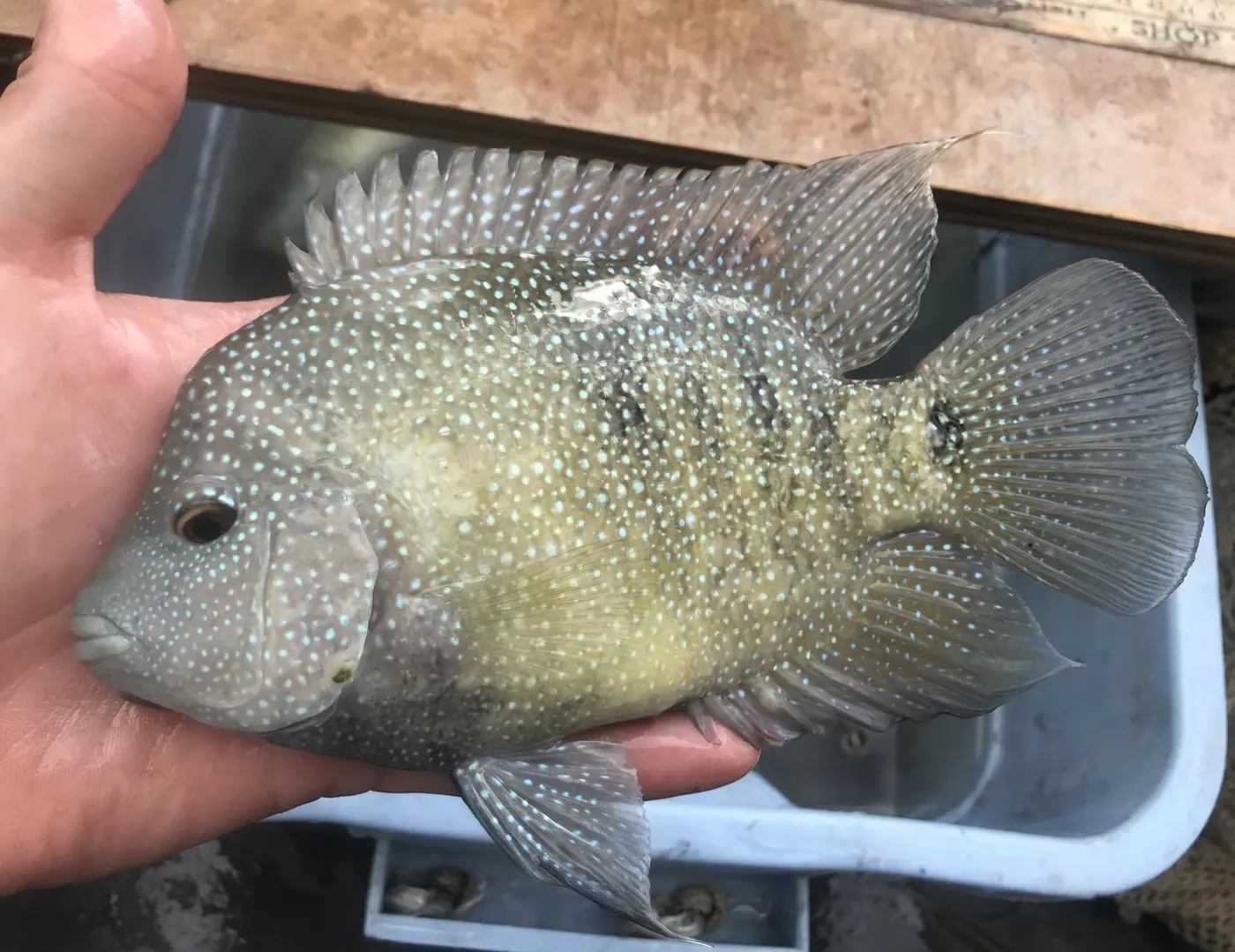
Creek or Guadalupe 5w?
Both rods fit this fishing, but they solve different problems.
Ten flies we recommend for Rio Grande cichlids
This box starts with patterns designed by two Central Texas tiers who understand these fish: Matt Bennett’s Rio Getter, Carp-It Bomb, and Lunch Money, along with Chris Johnson’s Rio Bandito. From there, we add compact patterns that cover the water column without giving the fish too much material to grab short.
- Bennett’s Rio Getter. Olive with orange accents, sizes 10–12. The first fly we reach for when we need a compact, proven Central Texas pattern.
- Johnson’s Rio Bandito. Dark or olive, sizes 8–12. A compact, locally designed option for working close to rock, roots, and beds.
- Bennett’s Carp-It Bomb. Rust, olive, or tan, sizes 8–12. A good bottom-oriented choice when Rios are focused on small crustaceans.
- Bennett’s Lunch Money. Keep it on the small side in natural baitfish colors. Best for larger fish in deeper pockets or around ambush cover.
- Small beadhead crawfish. Olive, brown, or rusty orange, sizes 8–12. Choose a compact tie with claws and legs that do not overwhelm the hook gap.
- Damselfly or dragonfly nymph. Olive or brown, sizes 10–14. Fish it slowly along vegetation, shade lines, and soft edges.
- Compact rubber-leg nymph. Black, brown, or olive, sizes 10–12. Trim overly long legs if fish keep grabbing or moving the fly short.
- Micro Clouser. Olive-and-white or tan-and-white, sizes 8–10. Useful when fish are chasing small minnows or holding in deeper water.
- Beadhead annelid. Black, red, or olive, sizes 10–14. Simple, easy to see, and especially useful when fish are close to the bottom.
- Small foam spider or popper. Black, yellow, or olive, sizes 10–12. A fun option when fish are looking up or aggressively guarding shallow water.
Do not treat the list as a rule. Carry two or three sizes, and pay attention to how each fly sits in the water. If a Rio repeatedly moves a pattern instead of eating it, change the fly’s proportions before changing the entire idea.
Let the fish show you what matters
Rio Grande cichlids reward observation. Find the soft water beside current, identify the piece of cover a fish is using, and watch how it reacts. A refusal might mean the fly is too large, too fast, too deep, or simply too easy to grab by the wrong end.
That problem-solving is the appeal. With a compact fly, a straightforward leader, and a rod suited to the size of the water, Rios turn an ordinary Central Texas creek into one of the most technical and entertaining fisheries we have.
HANDCRAFTED IN TEXAS
Choose the rod for your water.
The Creek and Guadalupe 5w are assembled, wrapped, finished, and inspected by hand in New Braunfels. Tell us where you chase Rios, and we’ll help you choose the right starting point.