FISH & SEASONS · PANFISH
Fly Fishing for Texas Panfish: Small Water, Big Fun
A light rod, a hopper-dropper, and an hour before dark. Here is where to find Texas panfish, what to tie on, and why small fish make great evenings.
By GUADALUPE ROD CO · 9 min read · September 2026 · Central Texas
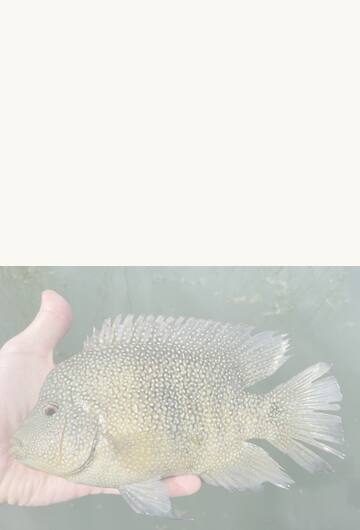
Long day at work? Grab a light rod, a small box of flies, and whatever daylight is left. Panfish do not need a destination trip.
They are not large, and that is the point. They are colorful, numerous, usually willing to play, and a lot more fun than sitting inside wishing you had gone fishing.
Reset your expectations
Panfish become more enjoyable when you stop measuring the experience by size. A hand-sized sunfish will not test your backing, but it can provide an immediate strike, surprising color, and enough resistance to bend a light rod.
Central Texas can produce bluegill, green sunfish, longear sunfish, redear, warmouth, and naturally occurring hybrids. Their appearance changes with species, sex, breeding condition, water, and hybridization. Part of the fun is never knowing exactly what the next fish will look like.
Where to find panfish
Panfish relate to the same kinds of structure that attract larger predators. Look for overhanging trees, bushes touching the water, cypress roots, vegetation, fallen branches, undercut banks, rock ledges, current seams, shade, and dock posts.
At local parks, some of the best water is directly against the bank. Fish the closest cover first. A pocket between two roots may hold several fish, while an overhanging branch continually delivers terrestrial insects. Accuracy is usually more valuable than distance.
My hopper-dropper setup
About 80 percent of the time, I begin with a hopper-dropper. I tie a Chubby Chernobyl, Llano Bug, or foam spider on top, then attach a smaller subsurface fly beneath it.
The top fly acts as an indicator, but it is also a legitimate meal. Underneath, a Rio Bandito or small lightly weighted Woolly Bugger covers the subsurface water around roots and vegetation. Adjust the distance between the flies for depth, keeping the dropper light enough that the rig remains pleasant to cast.
Place the flies close to cover and let them settle. A small twitch moves the foam legs and causes the dropper to rise and fall. Then pause. Panfish often eat during that pause. A dip, sideways movement, or unexplained stop means it is time for a controlled lift or strip set.
When the easy fishing gets difficult
Panfish can still become selective. If the hopper-dropper stops producing, change the depth, reduce the dropper size, or switch to a Pheasant Tail, Hare’s Ear, or another simple nymph.
If that fails, I am not ashamed to use a worm, mop fly, or another pattern someone might call a “trash fly.” At that point, the goal is not to impress anyone. The goal is to catch a fish. Fishing is supposed to be fun.
Ten flies for Texas panfish
- Chubby Chernobyl. A visible foam fly that can attract surface eats while supporting a light dropper.
- Llano Bug. A Texas-oriented foam pattern for shaded banks, roots, and vegetation.
- Foam Spider. Let it land softly, wait for the rings to disappear, then twitch and pause.
- Rio Bandito. A compact local pattern that works well beneath foam for sunfish and Rio Grande cichlids.
- Small Woolly Bugger. Use a lightly weighted version as a dropper or fish it alone in olive, black, or rust.
- Small Kreelex. A flashy baitfish pattern for aggressive fish; fish weighted versions alone rather than below foam.
- Pheasant Tail. A dependable point fly when fish refuse larger or more active patterns.
- Hare’s Ear. Its rough body suggests several kinds of aquatic food.
- Worm fly. Easy to see and productive after rain, in stained water, or when other flies are ignored.
- Mop fly. Not traditional, but effective when the goal is simply getting a fish into the net.
Creek or Guadalupe 5w?
My favorite panfish rod is the Creek. Its 7'6" 3/4-weight S-glass blank makes short casts easy and allows smaller fish to bend the rod deeply. It loads with little line outside the tip and fits beneath trees and around tight bank cover.
Sometimes I bring the Guadalupe 5w instead. It provides additional reach, handles wind and heavier rigs, and gives me more authority if I expect a bass around the same roots. Choose the Creek for close water and maximum feel; choose the Guadalupe 5w when the water, rig, wind, or chance of bass asks for more.
Panfish and kids
Panfish are one of the easiest ways to show a child why fishing is fun. They are accessible and often willing to bite, so the day does not depend on one perfect opportunity.
My four-year-old loves chasing them at parks around town. For now, she usually uses a spinning rod because it is easier to manage. I am not worried about making her fly fish before she is ready. The goal is simple: let her cast, catch fish, and want to come back.
Keep the rig simple, choose water with plenty of fish, use sunglasses for eye protection, and let the child set the pace. A few small panfish can create the trip they talk about all week.
After work. A light rod. An hour before dark. That is more than enough reason to go fishing.
HANDCRAFTED IN TEXAS
Made to be fished.
Keep reading, explore rods assembled, wrapped, finished, and inspected by hand in New Braunfels, or tell us about the water you fish.