RIGS & TACTICS
Our Guadalupe River Trout Rig: Oros and Two Nymphs
Rig an Oros indicator with Pat's Rubber Legs or a flashy lead fly, a small trailing nymph, and weight as needed. Compare our Creek and Guadalupe rods.
By Jack Lienhard | September 29, 2026 | GUADALUPE TROUT | 7 MIN READ
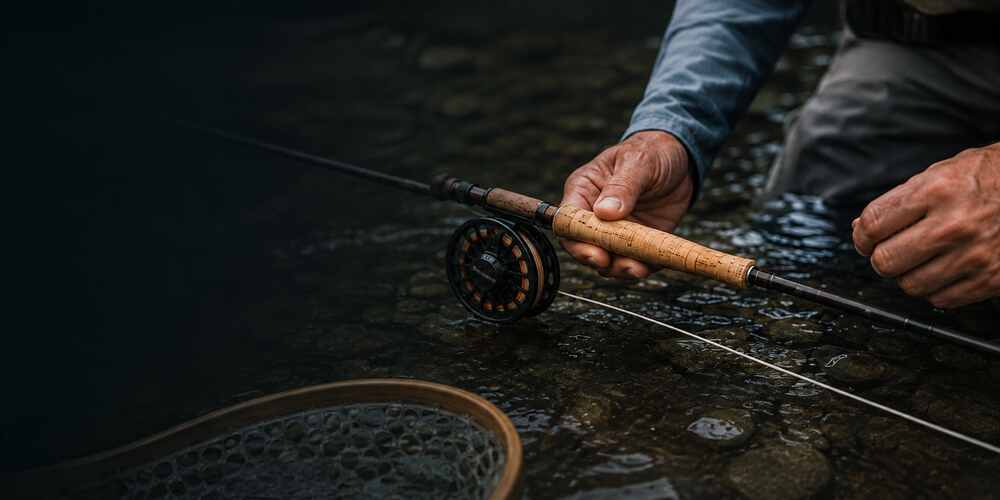
Our recommended starting rig for Guadalupe River trout is simple: an Oros indicator, two flies underneath, and enough weight to put those flies in the feeding lane.
We start with a fly that offers flash or movement, such as Pat's Rubber Legs, followed by a smaller nymph. It gives the fish two different looks while letting you concentrate on depth and the drift. This is a starting point to adjust on the water, not a promise that one pair of flies will work every day.
How to set up our Oros indicator trout rig
- Floating line and leader: begin with a manageable 9-foot leader, then adjust its overall length to the water. A longer system can help in deeper water, but only if you can cast and control it cleanly.
- Oros indicator: choose the smallest size that reliably supports your flies and added weight. Position it for the depth you need, rather than leaving it in the same place all day.
- Lead fly: try Pat's Rubber Legs in roughly sizes 8-12, or a smaller flashy bead-head attractor in sizes 12-14 when a lighter rig is more appropriate.
- Trailing nymph: start around 16-20, using a small Pheasant Tail, Zebra Midge, or another compact pattern suited to the conditions.
- Tippet: 4X to the larger lead fly and 4X or 5X to the smaller nymph is a practical starting range. Match diameter to hook size, current, and the fish you expect.
For a straightforward in-line setup, tie the lead fly first and add the trailing nymph on about 12-20 inches of tippet. A connection at the lead fly's eye or a suitable dropper arrangement is also an option. Check every knot and adjust the spacing if the flies tangle or you foul-hook a fish.
Oros's setup instructions explain how to secure and move the indicator without over-tightening it. Choose the indicator to support the rig; a larger float is not automatically the better choice.
Pick the flies with newly stocked trout in mind
During the main stocking season, many Guadalupe trout encounters involve recently stocked rainbows. We like to begin with a visible lead fly that offers some movement or flash, then give the fish a smaller, quieter choice underneath it.
Pat's Rubber Legs supplies a leggy profile. A flashy bead-head pattern gives you a different visual cue. Behind either one, the smaller nymph can offer a more subdued presentation. You are testing which look the fish accept, rather than assuming every stocked trout wants the same fly.
| Lead fly | Trailing fly | When we would try it |
|---|---|---|
| Pat's Rubber Legs | Small Pheasant Tail | A leggy profile paired with a compact nymph |
| Flashy bead-head attractor | Zebra Midge | A lighter pairing with a small, simple trailer |
| Smaller, less flashy nymph | Subtle small nymph | Clear water or fish refusing the more visible pairing |
Recently stocked fish, fish that have been in the river longer, and holdover trout can ask for different presentations. If the conspicuous pattern is getting refused, reduce its size or flash. If fish are visibly feeding on a particular food source, let that observation guide the change.
Verify releases through the current TPWD stocking schedule and GRTU information. Our stocked rainbow trout guide covers the broader fishery and seasonal context.
Use weight to reach the fish, then adjust the indicator
Two useful flies will still struggle if they pass above the fish. Start with the weight built into the flies, then add a small amount of removable split shot above the lead fly when the current or depth requires it. Use enough to reach the lane without turning every drift into a snag.
As a starting estimate, the distance from the indicator to the bottom fly can be roughly one and a half times the water depth. Current speed, fly weight, and how quickly the rig sinks change that estimate. Adjust by the result: occasional bottom contact can help identify depth, while repeated hang-ups call for less depth, less weight, or a different lane.
A true drop-shot version is another option: tie the flies on short dropper tags above a terminal weight below both flies. That changes the layout from the simple in-line rig. Keep the droppers short enough to manage, check the local tackle rules, and adjust the terminal weight to the current. Added weight above the flies and a drop-shot weight below them are different arrangements.
Change one thing at a time. Move the indicator, make a few drifts, then change the weight if needed. That tells you more than simultaneously changing both flies, the leader, and the depth.
Fish a controlled drift instead of chasing a long cast
Start with a short, manageable cast into a seam or soft edge. Give the flies time to sink before they reach the fish. Mend the floating line as needed to reduce drag, while keeping enough connection to respond when the indicator pauses, turns, or dips.
Weighted two-fly rigs reward smooth casts with room in the loop. Water-load or roll-cast when practical, and avoid repeated tight false casts that bring the flies and indicator together. If the rig is awkward, simplify it before trying to force more distance.
For another explanation of the basic method, Orvis's indicator-rig lesson demonstrates two-fly rigging and depth adjustments.
Our Creek rod or Guadalupe 5w: which would we use?
| Rod | Current specifications | Our trout use |
|---|---|---|
| Creek | 7'6", 3/4-weight S-glass | Close casts, sheltered water, a small indicator, and lightly weighted flies |
| Guadalupe 5w | 9-foot, 5-weight carbon | Our default for the full two-nymph rig, longer mends, open water, and added weight |
The Creek makes sense when the rig stays light and the fishing is close. Its shorter length suits sheltered presentations, but gives you less reach for controlling line across several currents. Pick it because the water and flies fit, rather than simply because the trout were recently stocked.
The Guadalupe 5w is our primary recommendation for the Oros, two flies, and added-weight setup. Its 9-foot length provides more useful reach for mending, while the 5-weight format is a better match for a larger indicator and weighted flies.
Whichever rod you choose, use suitable tippet, land fish efficiently, and handle them with wet hands. Check flows and temperatures before targeting trout; a lighter rod is not a solution for water that is too warm.
Guadalupe trout rig questions
Do I always need split shot?
No. Start with your fly weight. Add weight when the flies are not reaching the feeding lane, and remove it when it causes repeated hang-ups.
Can I simplify it to one fly?
Yes. If two flies are tangling, start with one well-presented nymph and add the second when you can manage the drift consistently.
Where should I check the fishing rules?
Use TPWD's Guadalupe trout information and current fishing regulations. Special harvest rules apply to particular reaches, not uniformly to the whole river.
HANDCRAFTED IN TEXAS
Made to be fished.
Keep reading, explore rods assembled, wrapped, finished, and inspected by hand in New Braunfels, or tell us about the water you fish.