FISH & SEASONS
Fall Fishing on the Guadalupe: Upper vs. Lower
Plan fall fishing on the Guadalupe River. Compare the upper river, Canyon Dam tailwater, and New Braunfels water, with target fish and practical tactics.
By Jack Lienhard | September 29, 2026 | GUADALUPE RIVER | 7 MIN READ
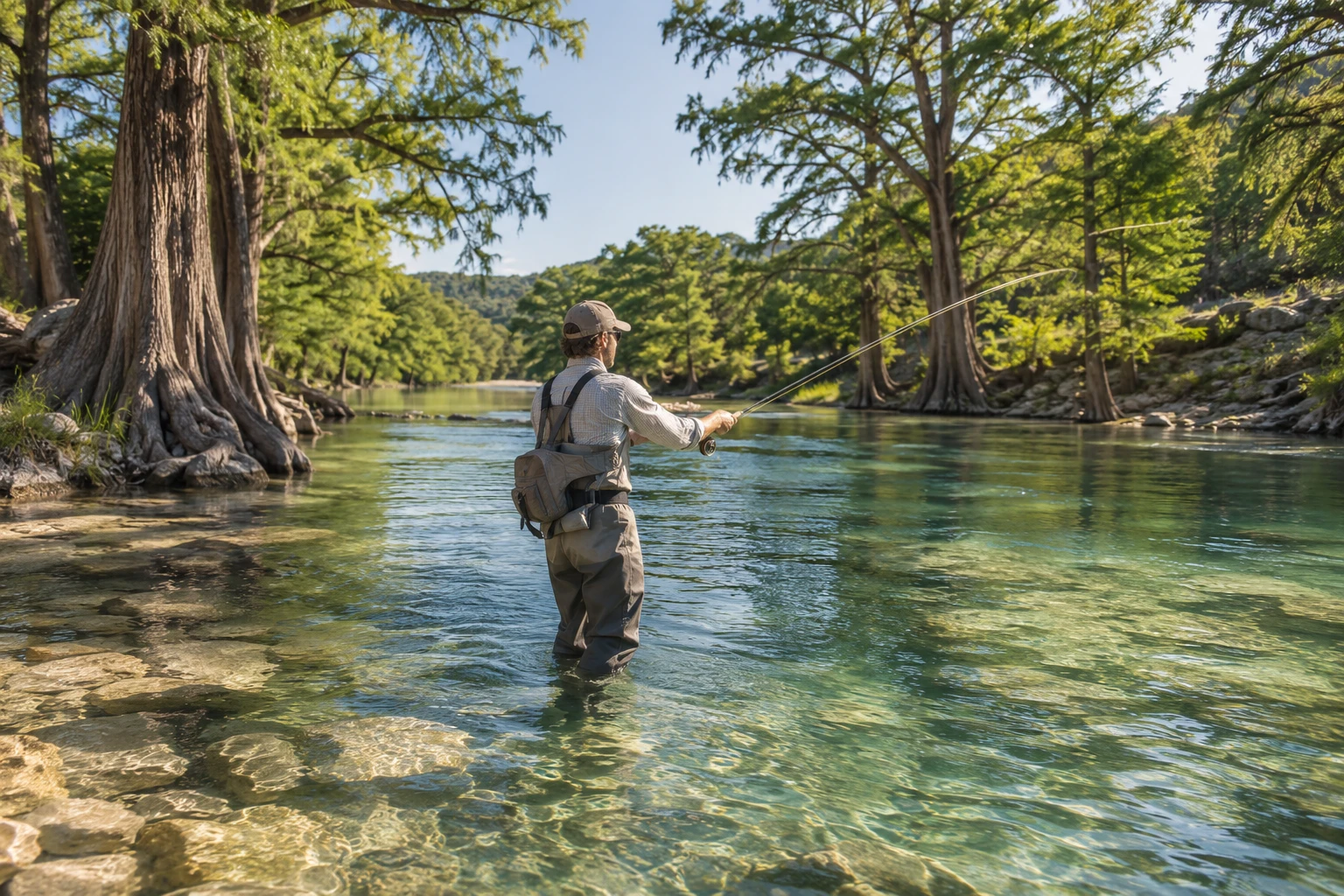
Fall fishing on the Guadalupe River offers several different trips. You can chase native bass above Canyon Lake, fish warmwater species around New Braunfels, or plan for trout in the colder tailwater below Canyon Dam.
The key is choosing the stretch before choosing the flies. An early September bass day and a late November trout day may both happen on the Guadalupe, but they need different expectations, tackle, and water conditions.
What do we mean by the upper and lower Guadalupe?
For this guide, the upper Guadalupe means the river above Canyon Lake, including Hill Country stretches around Hunt, Kerrville, Comfort, and Spring Branch. The lower Guadalupe means water downstream of Canyon Dam. That lower river includes the Canyon Lake tailwater, River Road, New Braunfels, and much more river beyond our local area.
The trout tailwater is one part of the lower river. Water farther downstream around Gruene and New Braunfels should not automatically be treated as the same coldwater fishery. Check the actual stretch, temperature, and recent reports.
| Stretch | Fall focus | Starting approach |
|---|---|---|
| Above Canyon Lake | Guadalupe bass, largemouth bass, sunfish | Fish current seams, rock, shade, and deeper pockets |
| Canyon Dam tailwater | Rainbow trout when temperatures and stocking support it | Check temperature and flows; fish controlled subsurface drifts |
| Farther downstream | Bass, sunfish, and catfish in suitable habitat | Match slower pools, cover, access, and local regulations |
Upper Guadalupe fall fishing: bass and sunfish
Guadalupe bass are a natural focus in flowing Hill Country water. TPWD's Guadalupe bass species guide describes their preference for current, while largemouth bass generally favor quieter water. That distinction gives you a useful starting map within a single pool.
For Guadalupe bass, work the seam below a riffle, the downstream side of a rock, a limestone shelf, and pockets with enough current to bring food past cover. Start with compact crawfish patterns or small baitfish flies. On spinning gear, small soft plastics, compact jigs, and modest paddletails are practical starting choices.
For largemouth, spend more time near slower water, submerged wood, shaded banks, and deeper edges. A small streamer or soft plastic worked past cover can be more useful than repeatedly fishing the strongest current.
Sunfish make a lighter setup worthwhile. Small foam bugs, poppers, and nymphs let you explore protected banks and quiet pockets. A warm afternoon may produce surface activity, while a cold front can make a slower subsurface presentation the better starting point.
Keep the retrieve flexible. Begin with short strips and pauses, then let the fish show whether they want a moving fly, a sinking fly, or one held close to cover. Our small-water Guadalupe bass guide goes deeper into reading those pieces of habitat.
Lower Guadalupe fall fishing: when trout enter the plan
Below Canyon Dam, the trout fishery depends on coldwater conditions and stocking. Rainbow trout are the main trout target for most visitors; brown trout can also be present. The TPWD Guadalupe trout page identifies the local trout area and the reaches with special harvest rules.
Do not assume the fall stocking season has started because the air feels cool. Check the current TPWD stocking schedule and GRTU updates before planning a trip around newly released fish. Older schedules are not confirmation of this year's dates.
Early fall may still bring warm water and vulnerable holdover trout. Carry a thermometer, measure where you intend to fish, and choose warmwater species if the water is too warm. Trout Unlimited's temperature guidance explains why cool air alone is not enough.
When trout conditions are suitable, start with manageable runs, soft seams beside current, and deeper lanes that let fish feed without holding in the strongest flow. An indicator and two nymphs give you a straightforward way to adjust depth. Our Oros indicator trout rig pairs a leggy or flashy lead fly with a smaller trailing nymph.
For conventional tackle, compact artificial lures can be an option where allowed. Check the exact rules for your reach, including trout harvest restrictions, before choosing tackle or keeping a fish.
Farther downriver: fish the habitat in front of you
Through the broader New Braunfels area and farther downstream, look for warmwater opportunities instead of expecting trout everywhere. Bass and sunfish reward time around cypress roots, rock, shade, and slower edges. Catfish call for a different approach in deeper pools and appropriate conventional tackle, following the rules for that location.
Begin close to shore. Fish the nearest cover before wading through it, and check your access arrangement before crossing private property. A public-looking bank, resort entrance, or road crossing does not by itself explain where you may park and enter.
Plan a fall Guadalupe fishing trip from Austin or San Antonio
- Choose a stretch and a species. Decide whether the day is about upper-river bass, local panfish, or suitable tailwater trout conditions.
- Check the water. Use GRTU's river flow and temperature resources for the tailwater, and confirm conditions for any other reach you plan to visit.
- Confirm access. Check opening information, reservations, fees, and the permission needed for your entry point.
- Match the tackle. A light Creek suits short, sheltered presentations; the Guadalupe 5w adds reach for open river and indicator work.
- Check the rules. Review TPWD fishing regulations and GRTU river safety guidance.
Our local fly shop guide gives you places to ask about current conditions, flies, and access before reaching the water.
Fall fishing questions
Is fall only trout season on the Guadalupe?
No. Bass and sunfish give you options while trout plans depend on water temperature and confirmed stocking information.
Is the upper Guadalupe the Canyon Dam trout water?
In this guide, upper means above Canyon Lake. The Canyon Dam trout tailwater is downstream of the dam.
Which of your rods would you bring?
The Guadalupe 5w is our versatile river choice. Choose the Creek when close casts, light flies, and sheltered water are the plan.
HANDCRAFTED IN TEXAS
Made to be fished.
Keep reading, explore rods assembled, wrapped, finished, and inspected by hand in New Braunfels, or tell us about the water you fish.